Shakespeare
Four-hundred-year-old plays, one act at a time
Shakespeare wrote for a noisy crowd of apprentices, merchants and nobles packed into an open-air theatre. His plays were meant to be watched, laughed at and argued about, so they make a lot more sense once you know who everyone is and what just happened.
Each guide here walks through one play act by act, with the history behind it, the lines people still quote, and a short quiz to check yourself.
The Plays
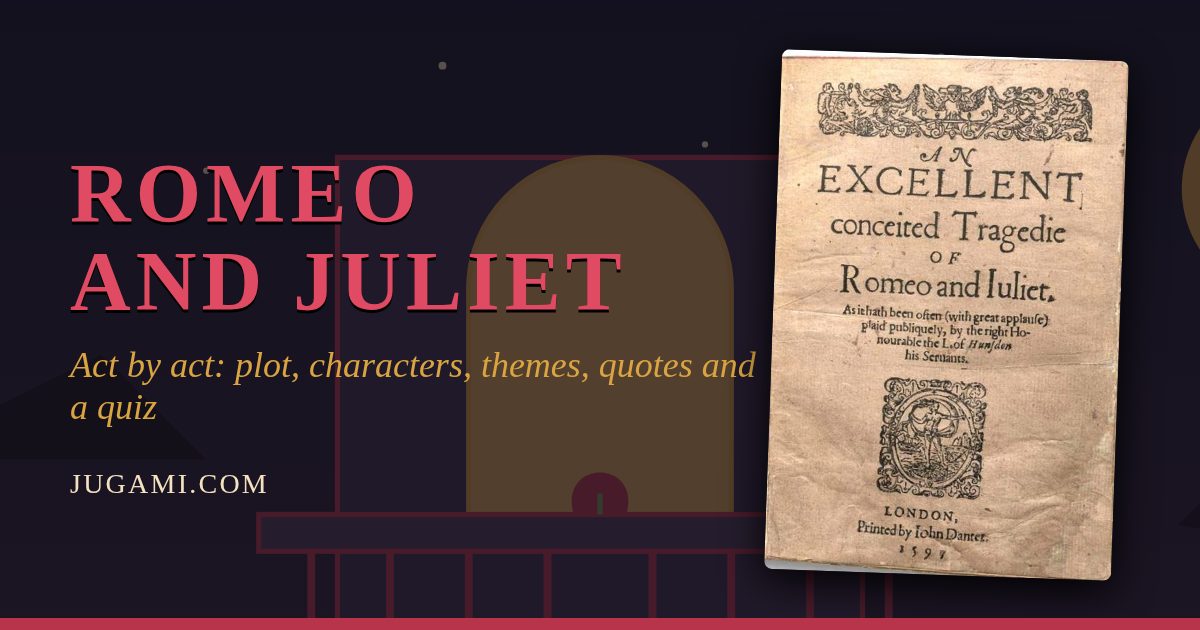
Romeo and Juliet
Two teenagers from feuding families fall in love in Verona, and everything happens far too fast.
Read the guide →
Macbeth
A brave Scottish soldier hears a prophecy that he will be king and decides not to wait.
Read the guide →
Who Was Shakespeare?
A glove-maker’s son
William Shakespeare was born in Stratford-upon-Avon, England, in 1564. His father, John, made gloves and served as a town official. By his late twenties William was in London, acting and writing plays.
The Globe
In 1599 his acting company built the Globe Theatre beside the River Thames. Poorer playgoers paid a penny to stand in the yard right in front of the stage, while richer ones sat in the covered galleries.
What he left behind
He wrote or co-wrote around 38 plays and 154 sonnets before he died in 1616. Seven years later, two fellow actors collected 36 of his plays in a big book now called the First Folio. Without it, about half of those plays might have been lost.
Words we still use
Plenty of phrases from his plays are still in everyday use. Romeo’s friend Mercutio talks about a “wild-goose chase,” and Macbeth calls his bloody hands “a sorry sight.” Whether Shakespeare invented these or just made them famous, they stuck.